
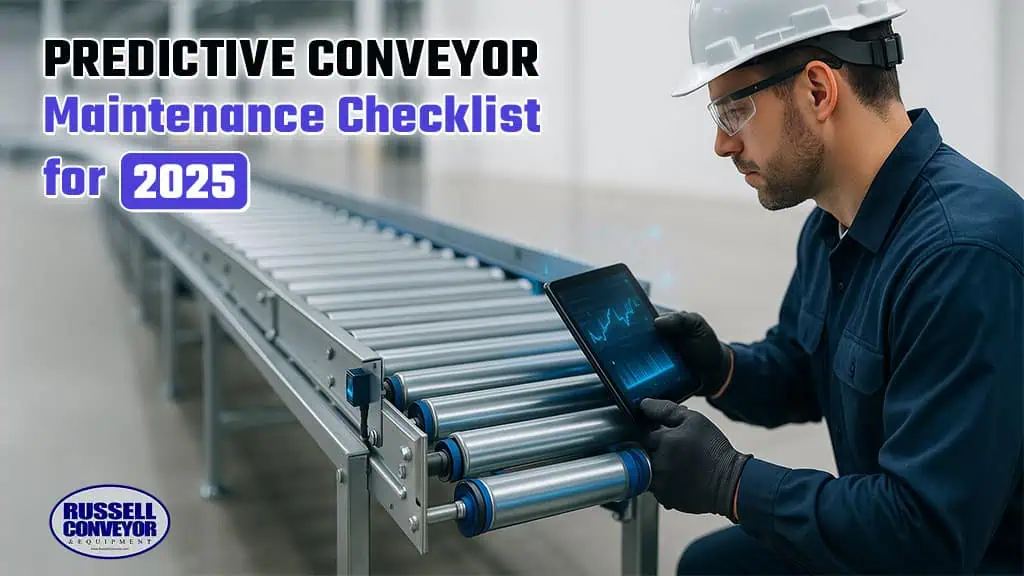
Staying Ahead of the Curve with Conveyor Maintenance
When a conveyor system breaks down, it’s not always just the products that stop moving. It halts the whole show. Whether it’s a roller going bad, a belt falling out of line, or wear and tear finally taking its toll, the small things pile up. But with a bit of predictive maintenance, you can keep your conveyor system running at maximum output.
Luckily, predictive maintenance isn’t just for the big corporations anymore. Smaller facilities are taking advantage of cheaper sensors, easier software, and big productivity payoffs. With predictive maintenance, you can turn stressful breakdowns into planned repair sessions.
If you’re looking for a heads-up on predictive maintenance, you’re in the right spot. In the following content, we’ll explore the particulars of maintaining your system and preventing unnecessary downtime.
What Is Predictive Maintenance?
Predictive maintenance isn’t magic. It’s simply using real-time data from your equipment, vibration, temperature, load, or even sound, to tell when something’s starting to wear out.
The predictive maintenance approach often works a lot better than the old “fix it when it breaks” routine. When you catch a problem early, you can plan the repair on your schedule instead of letting the breakdown choose for you.
- Predictive maintenance can cut downtime by about 40%.
- Maintenance costs drop around 30% once you go data-driven.
- In one study, a plant dropped its yearly repair bill from $6.8M to $2.4M after switching.
For conveyor systems, especially ones that run nonstop, predictive maintenance makes sense, no matter how you look at the matter.
A Predictive Conveyor Maintenance Checklist for 2025
Predictive maintenance isn’t complicated, but it requires a trained eye. To help you get started, we’ve put together a useful checklist to help keep your conveyor system running without surprises:
1. Get a Baseline
Start by taking inventory. Look at current maintenance logs, downtime reports, and common failure points. Write down which parts usually give you grief, whether it’s bearings, rollers, motors, or belts. Knowing your weak spots helps you focus on what matters most.
2. Add Smart Sensors
Install sensors where movement and heat live: bearings, drives, gearboxes. You don’t need to monitor every bolt, just the key components that fail most often. Even a few sensors can give you early warnings that will be worth their weight in gold in the end.
3. Start Collecting Data
Connect your sensors to a central dashboard. You’ll start seeing what “normal” looks like. From this you’ll be able to build an understanding of how your system behaves.
4. Set Alerts
Once you know the baseline, set thresholds. Maybe a motor’s vibration increases by 15%, or a bearing starts running hot. The system should ping you before that turns into a breakdown.
5. Keep the Human Touch
Walk the line. Literally. Listen for weird noises, check for dust buildup, misalignment, or loose parts. Sensors are great, but they don’t replace an experienced tech with a wrench and good instincts.
6. Plan Smart Repairs
Use your data to plan work when production is low. You get choose when to pause, not the conveyor. Keep spare parts ready so the repair doesn’t turn into an all-day project, and you can get back to work.
7. Track and Learn
Every time you fix something, jot down what the readings looked like before. Over time, that becomes your own playbook where you have an understanding of what vibration means trouble, what temperature signals bearing wear, and so on.
8. Review Regularly
Every few months, look over the data. Are alerts dropping? Any trends showing up? Fine-tune the system. The more you adjust, the smarter it gets.
When to Call the Conveyor Experts
Even with a great plan, some jobs need professionals. Conveyor systems can be tricky, and when things get beyond basic maintenance, it’s better to bring in help than to guess.
You’ll want to call the pros when:
- Repetitive Problems Arise
The same issue keeps coming back. Something deeper could be wrong — misalignment, tension problems, or structural issues. - Big and Difficult Repair Jobs
You’re replacing big components. Motors, gearboxes, and belt drives require special tools and setup. - Electrical Repair
Electrical or control systems act up. Leave PLCs and drive tuning to certified technicians. - Making Upgrades to Equipment
You’re upgrading or adding new lines. Professionals can check load balance and system design before you commit. - When Safety Becomes an Issue
Safety or compliance is in question. Damaged guards, emergency stops, or OSHA-related fixes should never be DIY. - Major Mishaps or System Failures
You’ve had a major failure. After a breakdown, experts can help with inspection, alignment, and root-cause analysis.
Russell Conveyor is Your Partner in Reliable Maintenance
At Russell Conveyor, keeping systems moving isn’t just what we do — it’s what we’re built for. Our team designs, builds, and maintains systems to prevent conveyor downtime and keep production flowing day in and day out.
We can help you set up predictive conveyor maintenance from the ground up, from installing sensors and dashboards to training your crew to interpret the data. Whether you’re running a small facility or a large distribution center, we want to be your partner for high-quality conveyor systems and proven repair methods.
Call us today at (336) 526-3014 for a FREE consultation. We’ll provide a custom solution to your conveyor system, and keep your products moving forward smoothly, and effortlessly.
FAQs about Predictive Conveyor Maintenance
It makes to have a few questions about maintenance and repair for conveyor systems. To help your repairs go smoothly, we’ve answered a few of the repeated questions we see on the subject:
Predictive conveyor maintenance helps you fix problems before they shut down your line.
No. You can add sensors to almost any system.
Costs vary based on your facility’s size and layout, but many systems pay for themselves within a year.
Vibration and temperature sensors are the starting point for most facilities.
Not really. Most systems come with simple dashboards and alerts.
Not all, but it’ll drastically reduce them and help you plan repairs.
Weekly is a good start, though busier systems may need daily reviews.
Ignoring alerts or failing to follow up when data looks off.
Yes. Even a few sensors can save thousands in lost time.