
Conveyor IoT Sensors
Anyone who has spent time around a busy production floor knows that even small problems add up. A chain that’s a little too loose or worn may not seem like a big deal at first, but over weeks and months, it slows everything down. Then one day it fails, and the line stops. Suddenly, the “small problem” turns into a costly repair and lost hours of output.
IoT sensors give conveyor system operators real-time conveyor analytics, a picture of what’s happening inside the system that allows you to go from reacting to breakdowns to proactively preventing them.
If you own a conveyor system and are looking for ways to take advantage of conveyor belt automation, you’re on the right track. Below, we’ll explore IoT sensors for conveyor belt chains and how they’re a small but mighty aspect of optimizing your system for the future.
What is IoT Conveyor Monitoring?
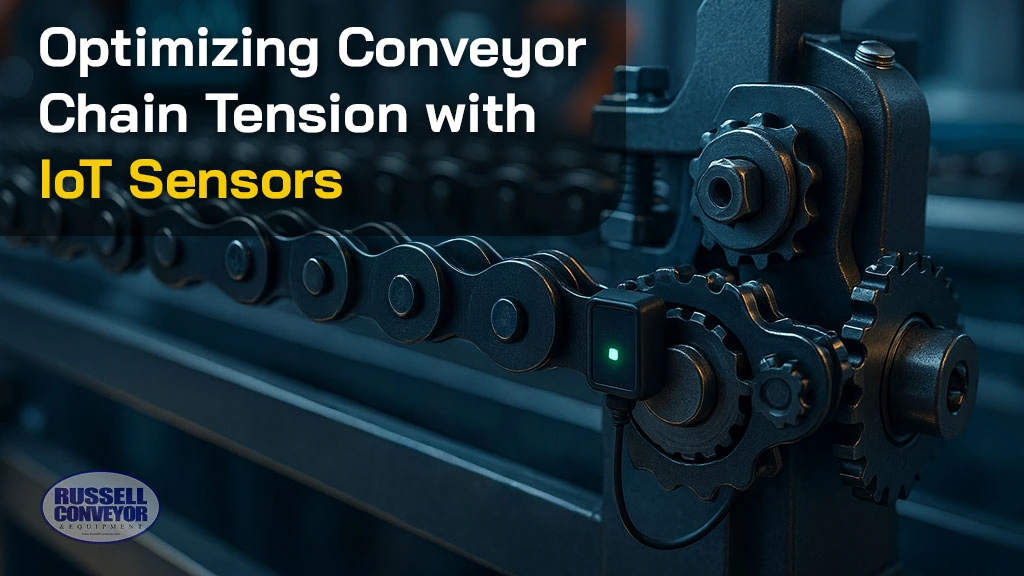
IoT sensors are small devices that collect information and send it to a network to be monitored or analyzed. For conveyors, this usually means tracking vibrations, temperature, or chain tension.
With an IoT sensor, you’ll know right away when things move out of normal range, causing fewer surprises, less downtime, and more predictable performance.
How IoT-enabled MDR Conveyors Improve Your Production
Motor-driven roller conveyors already improve flow compared to older setups, but IoT sensors take them further. They give your conveyor line a sense of awareness, so that it knows when something’s off before people do.
Let’s explore how that translates into real-world benefits
- Less downtime
In industries like mining, chain fatigue alone causes 20–30% of stoppages. The cost? Often $100,000 or more each year. Sensors flag stress before chains break, so you don’t lose days of production.
- Longer equipment life
With proper conveyor chain tension optimization, wear drops by about 25%. That requires fewer replacements and longer use of your existing equipment.
- Better safety
Employees don’t need to step into dangerous areas for constant checks—the system handles it automatically.
- Efficiency gains
A conveyor running at proper tension consumes less energy and keeps the product moving without hiccups.
- Smarter planning
With accurate data, managers can schedule maintenance when it’s actually needed, not just because the calendar says so.
The Integration of IoT Sensors into Your Workflow
Adding IoT conveyor monitoring doesn’t mean tearing out what you already have. It’s more like giving your system a quiet upgrade. Check out this Conveyor IoT Integration guide for more information.
The process for implementing this into your workflow can be done with minimal downtime by taking the following steps:
1. Evaluate your line.
A technician identifies where chains and rollers experience the most stress.
2. Install compact sensors.
They’re small, rugged, and placed directly at tension points.
3. Connect to your system.
The sensors feed data into either your in-house network or a secure cloud platform.
4. Calibrate readings.
This step ensures accuracy for vibration, chain pull, and movement.
5. Go live.
From there, your team can watch performance in real time and receive alerts when something needs attention.
Most facilities find the integration smooth, with very little disruption to daily operations.
The Future of IoT-Driven Conveyor Systems
The trend in manufacturing is clear: equipment is getting smarter. In the next few years, conveyors will do more than move products. They’ll constantly adjust themselves based on what’s happening around them.
Expect to see:
- AI-powered analytics that predict breakdowns before any visible sign of wear.
- Tighter connections between conveyors and warehouse management systems to create seamless, automated workflows.
- Self-adjusting conveyors that respond to changes in product size, weight, or flow on the fly.
- Reduced energy use as systems learn the most efficient way to run at different load levels.
- Early adopters gaining a big advantage, cutting costs and running smoother operations while others play catch-up.
Russell Conveyor and Equipment Can Help You with Your Automated Conveyor Equipment
From chain-driven belt conveyors to multi-directional rollers with automated sensors, Russell Conveyor is proud to be a trusted source for all things conveyor-related. We help companies bring this technology into their operations without unnecessary complexity, and we can design custom solutions that fit your facility layout like a glove.
We manufacture our products in-house, and will work with you from the design phase to installation, maintenance, and beyond.
Call us today at (336) 526-3014 for a FREE consultation. We’ll answer all your questions and show you that moving things from A to Z in the modern age doesn’t have to be the challenge it once was.
FAQs about IoT Conveyor Systems
If you’re new to conveyor systems and automated logistics, you probably have a few questions. We’ve put together a collection of the most common questions we receive:
They track vibration and torque. When something drifts out of range, the system flags it.
Most systems can be upgraded. Sensors are designed to bolt onto existing conveyors.
Not much. Installations are fast and often done during scheduled maintenance.
Data is encrypted, and access is limited to approved users.
No. The dashboards are simple, and most teams learn them in a short session.
Mining, e-commerce, automotive, and food plants see the biggest gains, but any operation can benefit.
Usually within the first year—sometimes in just a few months.
This content is designed to explore IoT sensors for chain-driven conveyor systems and how they can help owners identify performance and hardware issues before they happen.