
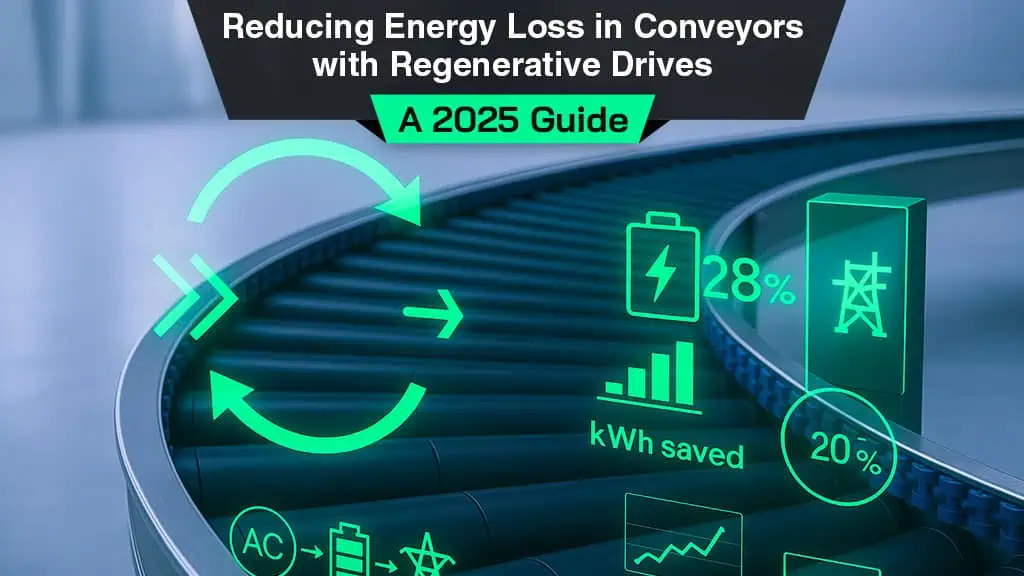
Energy Loss with Conveyors
Conveyors do their job quietly, but they can be real energy hogs. In many warehouses, they eat up 15-20% of the power bill. That’s a big number, and it stings even more as energy prices climb.
So, what do you do? You can’t just shut conveyors off. The smarter answer is to make them give something back. That’s what regenerative drives do. Instead of letting all that deceleration energy vanish as heat, they recycle it. The payoff comes out to lower bills and a smaller carbon footprint.
If you’re interested in maximizing your conveyor system’s productivity without increasing your overhead, this blog might just be right for you.
What Are Regenerative Drives for Conveyors?
Regenerative conveyor drives use the same idea as electric cars use to recharge their batteries when braking. When a roller or motor slows down, energy is created. Normally, it just disappears as wasted heat. With regenerative drives, it gets captured and pushed back into the system.
In plain terms, these drives stop your conveyors from throwing away free energy. They recycle it, and allow you to run longer and produce more at a lower cost.
Why Energy Loss Is a Bigger Deal Than It Looks
Conveyor energy loss is easy to ignore. But once you see the numbers, it’s hard to unsee.
- A single facility may spend six figures a year just keeping conveyors running.
- Studies show they account for one-fifth of a warehouse’s total energy use.
- And according to McKinsey, eco-friendly conveyor setups can cut carbon output by up to 40%.
How Regenerative Drives Cut Waste
Where do regenerative drives earn their keep? Every time a motor-driven roller slows down, the drive captures that energy instead of letting it vanish.
The benefits stack up fast:
- Bills drop
On average, companies save about 25% on conveyor energy.
- Less heat
Drives run cooler, which also helps HVAC systems.
- Parts last longer
Cooler, smoother systems mean fewer breakdowns.
- Cleaner operations
Recycled energy lowers your facility’s carbon profile.
Case Study: A Logistics Company’s Experience
One logistics firm made the switch to regenerative drives on Russell MDR conveyors in late 2024. They weren’t chasing a green badge. They just wanted lower costs.
Six months later, they were saving about $80,000 a year on power. Energy use was down by 23%. The real surprise? Carbon emissions dropped by nearly 40%. Operators also reported fewer overheating issues. What started as a cost-savings project ended up ticking all the sustainability boxes, too.
| Drive Type | Energy Use | Energy Recovered | Best Fit |
|---|---|---|---|
| Standard Motor Drive | High | None | Basic use, light-duty lines |
| Variable Frequency Drives | Medium | Low | Moderate energy savings |
| Regenerative Drive | Low | Up to 25% | High-volume operations |
Regenerative Drives in 2025 and Beyond
Looking ahead, regenerative drives are only part of the story. IoT sensors, AI-driven controls, and predictive analytics will make conveyors even smarter. We’re moving toward systems that not only recycle energy but also adjust themselves on the fly to maximize efficiency.
Companies that adopt these tools now will be positioned to handle rising energy costs and tougher carbon regulations later.
Russell Conveyor and Equipment is Your Partner for Regenerative Drives and Conveyor Systems
With regenerative drives, every slowdown turns into a chance to save. You’ll experience lower costs, fewer emissions, and smoother operations across the board. Hard to beat, right?
Russell Conveyor and Equipment offers energy-efficient conveyor systems designed for today’s warehouses, with plenty of options to get you started faster and produce more. We’ll visit your facility and develop a customized conveyor setup that fits both your layout and your logistics needs.
Ready to stop losing energy? Request a Green Conveyor Quote today when you call (336) 526-3014 and see how regenerative drives can change your operation.
Do you have questions about implementing regenerative conveyor drive systems? To help streamline your experience, we’ve answered some of the common questions we receive about these conveyor systems:
Often, yes. Many systems can be retrofitted.
Most facilities see 20-25% less energy use.
No—performance stays the same, just more efficient.
It’s higher than standard drives, but ROI usually comes within a year.
Not at all. Drives often run longer because they generate less heat.
Yes, depending on your setup.
Absolutely. Even smaller warehouses notice savings.