
An Excellent Pairing
2-3 Minute Read ⏱ Categories: Conveyor, Material Handling
Strategic Improvements
Most companies are on a continuous mission to improve their warehousing speed and efficiency. Implementing these changes is important to any business’s success.
Every day, new strategies are being expanded and fully realized to gain the upper hand. And as new tactics are being developed, existing plans are being revisited. One of these strategies that can be seen very frequently is called cross docking. Cross docking is the process of receiving items, quickly sorting and shipping the product, without having to store it. This has been a prevalent method since its popularization in the 1930’s trucking industry (Jenkins, 2023). But as we keep progressing these methods, we continue to find new ways to improve upon them. And one of those ways is to include conveyors into the mix.
In this blog, we continue the concept of kaizen by showing ways of constantly improving the idea of cross docking. First, we’ll discuss the individual parts of the process. Second, the negatives of cross docking will be acknowledged and compared to the positives. Finally, we’ll show how conveyors can completely change how this process operates.
Cross Docking: The Basics
The steps for cross docking are fairly simple. The process generally flows like this:
- Inbound
- Receiving
- Sorting
- Shipping
- Outbound
This is a very general layout most businesses follow. But what makes this interesting is when you start to realize how much work this simple plan covers. To fully optimize the workload, you first must strengthen each segment involved in the process. That means working tirelessly to efficiently dock trucks, quickly receive product, sort several products, manage your shipping speed, and safely export the product.
Advantages and Disadvantages
Strategies like this are just one of many other warehouse tools managers use to promote effective operations. But why do they even consider this over the plethora of others? It may all come down to preference and facility requirements.
One of the biggest positives about cross docking is that the company doesn’t have to store any of the products it receives. As soon as the shipment arrives, the process begins immediately. But with this immediate start, you may also lose a couple of things that could be valuable. For example, one of the largest drawbacks of this is the potential for communication loss. As the warehouse floor staff is moving at breakneck speeds, it’s easy for messages to get lost in the pace of daily operations (C3 Solutions, 2025). This is a general problem that could apply to any fast-paced warehouse, but when it comes to cross docking specifically, there’s one issue that stands out.
One of the biggest issues associated with cross docking is becoming inattentive and passive with this strategy. According to C3 Solutions, “Contrary to traditional belief, cross-docking requires more trucks and yard space than traditional docking”. With this being the case, it’s easy for people to underestimate their docking areas and effort required to make this process work. Planning events like this requires weeks or months of careful preparation to execute it correctly. To be successful with this, you must be alert and have a full grasp of your current capabilities.
Putting in the Work
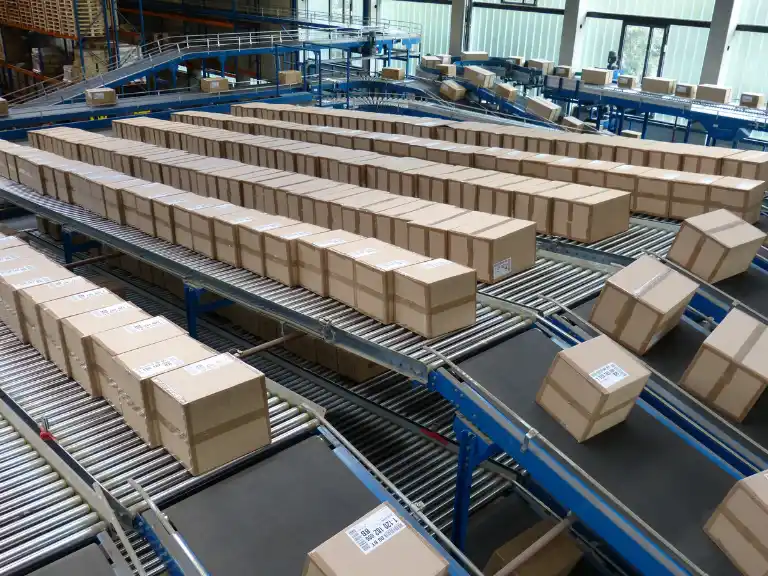
With the amount of time and work on this, warehouse managers or directors will look for solutions to make this process as smooth as possible. One of those solutions that can come in handy is conveyor systems. What these systems allow you to do is focus more on planning and communication instead of carefully monitoring the entire process. For example, if a manager was to invest in a sortation system, the warehouse floor employees would have much less work as it automatically sorts the items.
This by no means should replace careful planning and execution. However, having equipment that works for you is important in making sure your business is being run at maximum efficiency.
How Can Russell Conveyor Help?
At Russell Conveyor, we understand the hardships that come with manufacturing. Being in this industry for over 20 years has taught us that producing and transporting everything in-house is a challenging task. Our goal from the start was to make sure others succeed in these difficulties. Struggling should be a thing of the past, don’t wait to change that.
Call us today at (336) 526-3014 or message us at sales@russellconveyor.com.
Interested in learning more about our solutions, take a look at our conveyor systems page.
Curious on how to make big holiday orders easy, read our blog on holiday orders and pallet conveyors.
FAQs about Conveyor Systems
Have any questions on our conveyor systems after reading? Here we’ve answered some of the most common questions we receive.
We offer several different systems including Pallet, Gravity, Spiral, Sortation, Roller, Flexible, and many more.
You’re able to optimize output, improve accuracy, and offer scalability to your business.
First, we get a specific look at your facilities capabilities. Then, we integrate our products around this layout.
Yes, we offer a monthly subscription called “Russell+” that has various options for conveyor and warehouse maintenance.