
The More Things Change
3-4 Minute Read ⏱ Categories: Conveyor, System Design
Don't Break, Bend
Modern conveyor usage demands flexibility. Markets change, customer expectations evolve, and facilities constantly look for ways to increase throughput without committing to costly, disruptive system overhauls.
This can leave decision-makers with several different choices to make. Do they invest in the high upfront cost of new systems? Do they keep the old systems but retrofit them? These are all great questions to ask, but they all focus on one thing: the present situation at hand. While most companies do want to see improved throughput at a reduced cost, they also should consider future actions. This is where modularity can bridge the gap between future projects and current needs.
In this blog, we’ll talk about how modular design can save you from spending extra time in the future. Also, we’ll explain what exactly makes a design modular and the unique benefits that it offers. Finally, we’ll demonstrate how Russell Conveyor can help you through this process to get exactly what you need. Whenever you have these individual parts put together, it can not only give you better performance in the moment, but also prepare you for an uncertain future.
Why Modularity Matters
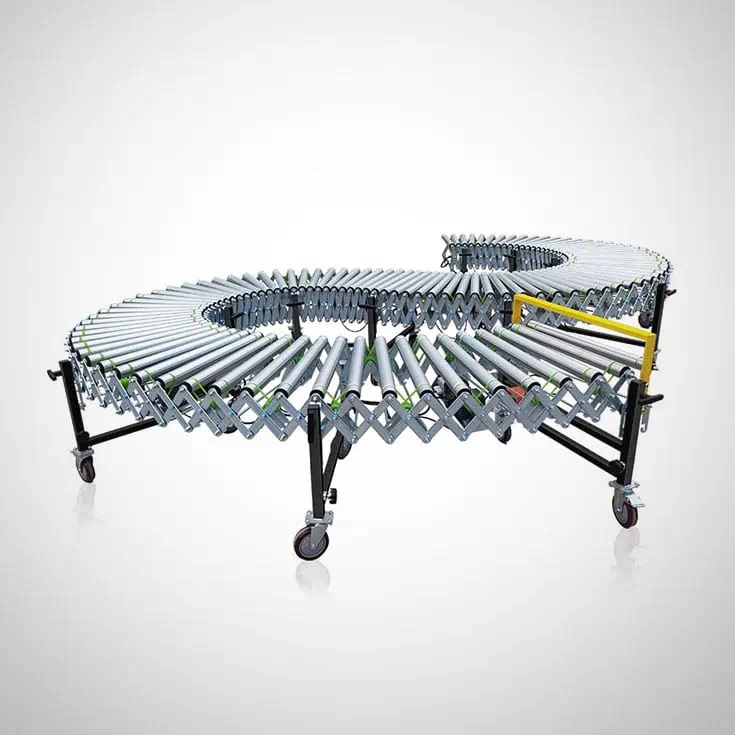
A modular conveyor system is designed using standardized, interchangeable components that can be easily added, removed, reconfigured, or upgraded. Rather than treating a conveyor like a fixed asset, modularity allows it to evolve alongside your operational needs.
This approach is particularly important in industries such as manufacturing, warehousing, e-commerce fulfillment, automotive, food processing, and packaging, where production requirements can shift with changing demand. Once this system is installed, your equipment can now serve different needs at various times. This inherently comes with unique benefits that you may not receive from regular machines.
Faster Expansion and Reconfiguration
One of the greatest advantages of modular conveyor units is scalability. When production volume increases or facility layouts change, operators can extend existing conveyor lines using compatible sections rather than installing new systems.
For example, a distribution center experiencing seasonal demand spikes may need to add accumulation zones, transfer sections, or additional workstations. With a modular design, these additions can often be integrated with minimal disruption to ongoing operations. This temporary boost can help quickly bolster performance but can also be removed when finished. This allows you to have your space back and remove the temporary solutions without a permanent effect.
Reduced Maintenance and Downtime
Traditional conveyor systems often require substantial labor when a major component fails. Technicians may need to disassemble large portions of the system just to access the affected area.
Modular units simplify maintenance by isolating components into sections. If a drive package, roller assembly, motor, or conveyor module experiences an issue, it can often be replaced independently without disturbing the rest of the line. This approach offers several benefits, such as:
- Faster troubleshooting
- Reduced repair times
- Lower maintenance costs
- Improved system uptime
- Simplified spare parts management
In these industries, every second of downtime can affect a company’s performance for its customers. Having the extra advantage of simplified repair allows you to maximize your ROI during strenuous times.
Lower Long-Term Ownership Costs
While initial investment is always a consideration, the true cost of a conveyor system extends far beyond installation.
Modular systems help reduce lifecycle costs by allowing facilities to:
- Reuse existing equipment during expansions
- Upgrade specific sections rather than entire systems
- Replace damaged modules individually
- Adapt layouts without major reconstruction
Instead of scrapping functioning equipment because operational requirements have changed, companies can continue leveraging their existing investment while making targeted improvements where needed.
How Can Russell Conveyor Help?
As you’ve already seen, these machines are intricate in their design but useful in their implementation. That’s why, when it comes to installation, you should only trust professionals with proven experience and knowledge. Russell Conveyor has been working in this field for over 20 years and has installed over 100 different systems in different locations. For any installation needs or service of your current equipment, Russell Conveyor is the perfect place to start.
Call us today at (336) 526-3014 or email us at sales@russellconveyor.com to get your free quote today.
Want to learn more about our installation services? Read our blog on the importance of a good installation.
FAQs about Modular Systems
Have any questions about our modular systems? Here, we’ve answered some of the most common questions we receive.
It depends on how you look at it. While they do have higher upfront costs, they tend to be cheaper in the long run because of their capabilities.
This equipment is known for how smoothly it can be implemented. Its design allows it to be added on instead of completely replacing units.
Yes. Being able to conform to your operation allows this equipment to save money and space.